
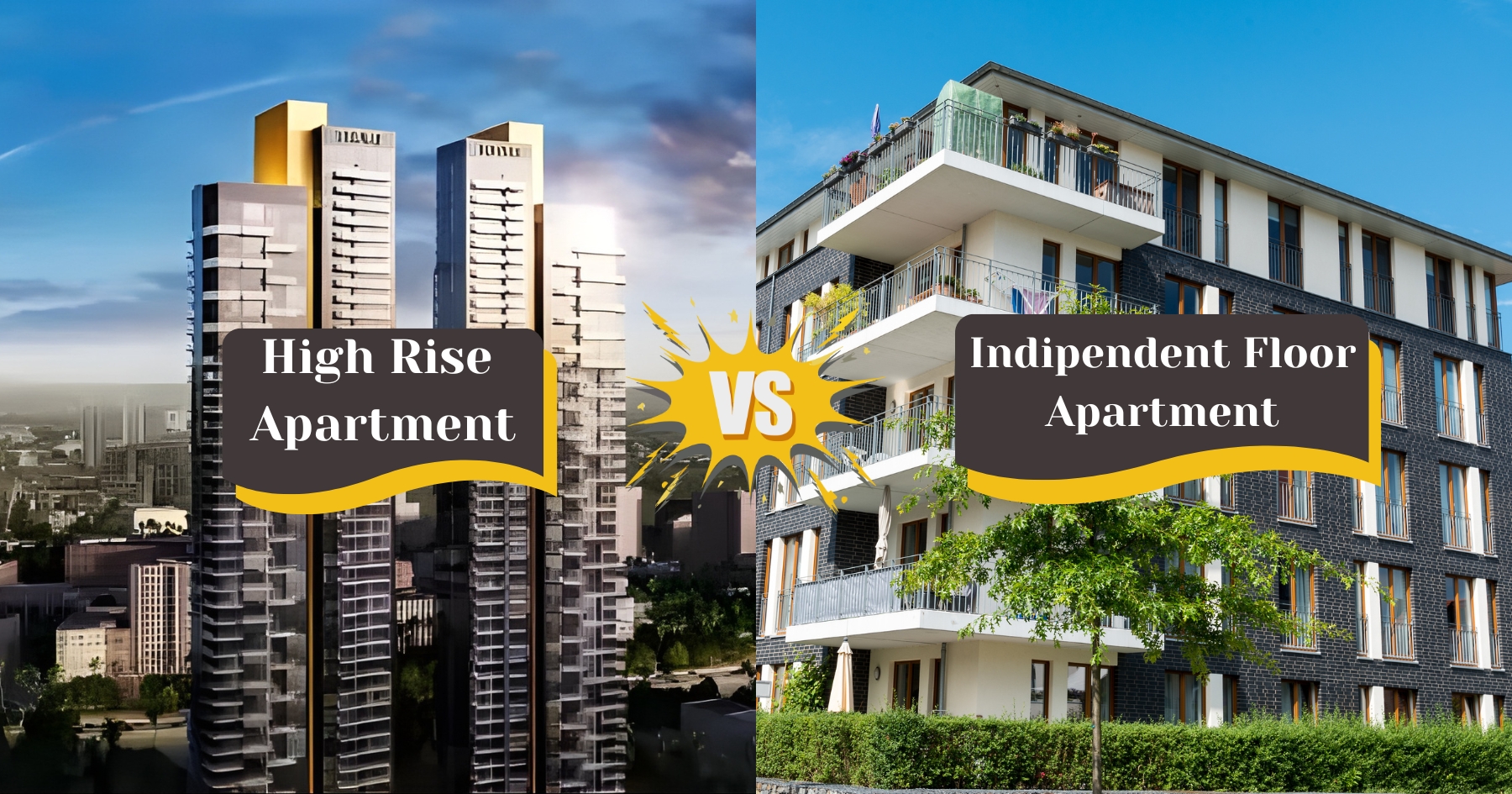

Independent Floors vs High-Rise Apartments: A Complete Buyer’s Guide for 2026
Choosing between independent floors vs high-rise apartments is one of the most important residential decisions buyers face today. In 2026, this choice is no longer driven by simple preference. It is shaped by lifestyle expectations, long-term financial thinking, maintenance economics, rental behavior, and how much control a buyer wants over their living environment.
In Gurgaon, where land scarcity, infrastructure growth, and premium residential demand coexist, both independent floors in Gurgaon and high-rise apartments in Gurgaon have evolved into mature asset classes. Each serves a different type of buyer—and misunderstanding this difference often leads to regret later.
This guide breaks down the decision clearly, practically, and realistically, using only real market behavior and data you’ve already examined, so you can determine which option aligns with your lifestyle and investment objectives in 2025.
Understanding the Two Housing Formats in Today’s Market
What Independent Floors Really Offer
Independent floors—commonly referred to as builder floors in Gurgaon—sit between villas and apartments. These are low-rise buildings, usually limited to two to four floors, where each floor is a self-contained residence with its own entrance, parking allocation, and in many cases, a private terrace or large balconies.
What fundamentally separates independent floors from apartments is land participation. Buyers do not just purchase a constructed unit; they acquire an identifiable share of the underlying plot. Over time, this land component becomes increasingly valuable, especially in established residential sectors where redevelopment permissions and FAR enhancements have been introduced.
From a living perspective, independent floors are defined by space. A typical 3BHK ranges between 2,500 and 4,000 square feet, allowing for larger bedrooms, defined dining areas, home offices, and servant quarters—features that have become increasingly relevant in post-pandemic living.
What High-Rise Apartments Represent
High-rise apartments reflect modern, vertical urban living. These developments consist of multi-tower complexes with dozens to hundreds of homes stacked vertically, supported by centralized amenities, professional management, and structured security systems.
In high-rise apartments in Gurgaon, buyers own individual units while sharing responsibility for common infrastructure—lobbies, elevators, water systems, security, and recreational spaces. Land ownership is fractional, distributed across a large resident base.
The appeal of this format lies in convenience and predictability. Maintenance, security, utilities, and amenities are managed professionally, creating a plug-and-play living environment that requires minimal personal involvement.
Financial Reality: Purchase Cost and Long-Term Ownership
Initial Capital Outlay
At the time of purchase, both property types appear competitively priced, but the cost structure differs in meaning.
Independent floors typically range between ₹1.05 crore and ₹2.5 crore for a 3BHK, with larger 4BHK floors in premium locations extending higher. Apartments span a similar range, with pricing varying significantly by corridor and project positioning.
On a per-square-foot basis, builder floors in Gurgaon often appear more expensive because land value is embedded in the price. Apartments may seem more economical per square foot, but this comparison becomes misleading when usable carpet area is considered. Floors generally deliver 40–50% more livable space at similar overall ticket sizes.
Monthly Maintenance: The Silent Wealth Factor
Maintenance is one of the most underestimated cost components in residential ownership—and over time, it becomes a decisive factor.
Independent floors typically incur ₹5,000–₹15,000 per month, covering basic services such as water supply, common area electricity, security staff, and waste management. These costs are usually managed through RWAs and remain relatively stable over time.
In contrast, high-rise apartments command ₹8,000–₹33,000 per month, reflecting the cost of extensive amenities, power backup, CCTV surveillance, professional security teams, and clubhouse operations.
When projected over a 20-year ownership period, this difference can translate into ₹15–20 lakhs in cumulative outflow. However, the comparison is not purely numerical. Apartment residents effectively outsource all maintenance responsibility, while independent floor owners must actively manage or coordinate repairs beyond basic RWA services.
For buyers with demanding professional schedules, apartments often provide mental and logistical relief. For those comfortable with hands-on involvement, floors offer long-term savings.
Rental Yield: Income Stability vs Absolute Returns
From an investment standpoint, rental behavior differs sharply between the two formats.
High-rise apartments consistently deliver 2.5–3.5% annual rental yields, driven by strong demand from corporate tenants, expatriates, and managed housing programs. These units lease faster, experience lower vacancy periods, and offer predictable income streams.
Independent floors generate comparatively lower yields of 2–2.5%, primarily because their tenant base is narrower and leasing cycles are longer. While absolute rental values can be higher, percentage returns remain modest relative to capital invested.
For investors prioritizing passive income and liquidity, apartments offer greater reliability. Floors, on the other hand, align better with buyers who value capital appreciation over immediate yield.
Independent floors derive appreciation primarily from land scarcity and redevelopment potential. In established sectors, FAR enhancements and redevelopment permissions have significantly improved long-term upside, pushing appreciation into the 8–15% annual range in select locations.
Apartments follow a different appreciation curve. Their value growth is tied to infrastructure completion, developer reputation, and neighborhood maturity, generally averaging 6–12% annually. While some apartment projects have seen rapid price escalation over short cycles, this growth is more sensitive to market timing.
City-wide data indicates strong appreciation momentum across both formats, reinforcing that time in the market matters more than format alone.
Independent floors provide a fundamentally different living experience. The additional space allows for separation between work, family, and leisure areas—something many households now consider essential rather than luxurious.
Apartments compensate for smaller layouts through design efficiency, higher ceilings, and shared lifestyle amenities. For smaller families and professionals, this balance often feels sufficient and easier to manage.
Privacy is where independent floors dominate. With limited neighbors and separate entrances, residents enjoy a villa-like sense of ownership and autonomy.
Apartments, while less private, foster community interaction. Shared spaces, events, and structured environments create social ecosystems that many families value—especially those with children.
Neither is superior universally; the difference lies in personal temperament and life stage.
Security infrastructure strongly favors apartments, which offer layered systems, controlled access, and documented protocols. Independent floors rely on RWA efficiency and private arrangements, leading to variability in protection standards.
Similarly, maintenance responsibility differs in impact. Apartments convert complexity into a fixed cost. Floors convert lower monthly outflow into higher owner involvement. Buyers must decide which trade-off suits their lifestyle.
Independent floors are best suited for buyers who value space, privacy, land ownership, and long-term appreciation—and are comfortable managing property operations.
High-rise apartments align better with buyers seeking convenience, professional management, rental income stability, security, and liquidity.
The choice is not about right or wrong, but about fit.
The rise of hybrid “high-rise builder floor” formats reflects buyer demand for privacy without sacrificing amenities. Sustainability features and smart home integration are becoming standard expectations across both formats, reinforcing long-term value rather than acting as differentiators.
The discussion around independent floors vs high-rise apartments should never be reduced to price comparisons or trends. It is a decision that affects daily living, financial outcomes, and long-term satisfaction.
Independent floors reward patience, space needs, and belief in land-led appreciation. High-rise apartments reward convenience, predictability, and hands-off ownership.
In 2025, the strongest choice is the one aligned with your lifestyle reality and investment horizon, not market noise.
High rise apartment and Builder floor
The main difference between independent floors vs high-rise apartments lies in space, privacy, and ownership structure. Independent floors offer larger layouts, greater privacy, and land participation, while high-rise apartments provide managed living, amenities, and community-based environments.
Independent floors in Gurgaon are often preferred for long-term investment because land ownership plays a key role in capital appreciation, especially in established residential sectors.
High-rise apartments in Gurgaon generally provide more consistent rental income due to higher tenant demand and faster leasing compared to independent floors.
In a builder floor vs apartment Gurgaon comparison, builder floors suit buyers seeking space and independence, while apartments suit buyers prioritizing convenience, security, and managed maintenance.
Builder floors in Gurgaon are suitable for families needing larger space and privacy, whereas apartments work well for families who prefer amenities, security, and community living.